California Combats Auto Scams, Makes New and Used Cars More Affordable

First-in-the-Nation California Combating Auto Retail Scams (CARS) Act Takes Effect October 1. Includes 3-day cooling off period for used car buyers.

At a time when the prices for new and used vehicles have reached record-breaking highs, due to President Trump’s hiking tariffs on auto components, common car dealer scams, and other factors, the California Combating Auto Retail Scams (CARS) Act (SB 766), authored by California Senator Ben Allen, will make buying new and used cars in California more affordable and less risky – without costing taxpayers.

Leading economists project that the CARS Act’s truth-in-pricing mandate and new protections against worthless add-ons will save California car buyers an estimated $234 million annually in reduced search costs, plus another 8.5 million hours in time savings each year.

In addition to those savings, the California CARS Act also creates a new, history-making first-in-the-nation 3-day cooling off period for used cars that cost $50,000 or less, giving used car buyers the right to return vehicles for any reason for a full refund, minus a restocking fee between $200 – $600.

This new right will empower used car buyers in negotiating with car dealers, and help consumers, including rideshare drivers and many small businesses, avoid getting stuck with unfair deals or unsafe, defective cars. It will also help give dealers who don’t scam their customers a competitive advantage.

The Act is aimed at protecting California new and used car buyers from the #1 source of consumer complaints nationwide: auto sales and service. According to the Consumer Federation of America annual consumer complaint survey, auto sales, manufacturing issues, and service complaints have topped the charts of the top ten consumer complaints to state and local consumer protection agencies for the past ten years.

Key provisions in the CARS Act:

  • Requires car dealers to disclose the “total price” up front and in advertising, including any add-on items installed by the manufacturer, making the actual “off the lot” prices more honest and transparent, and encouraging competition over prices
  • Prohibits car dealers from requiring the purchase of add-on items that were not installed by the manufacturer, in order to buy the new or used car
  • Requires dealers to disclose at the time of sale or lease that add-on items not installed by the manufacturer are optional
  • Bans car dealers from charging extra for add-ons that “would not benefit” car buyers, including lifetime oil changes or catalytic converter markings for electric vehicles, and service contracts that are void due to pre-existing conditions, such as prior damage from a crash or flood or preexisting mechanical conditions
  • Prohibits dealers from advertising or claiming they are affiliated with or endorsed by the U.S. military or any government agency
  • Creates a new first-in-the-nation right to return a used vehicle that cost $50,000 or less within 3 calendar days for any reason for a full refund, minus a restocking fee between $200 – $600 (and sometimes other fees)

For FAQs and more information about the CARS Act and how to make the most of the new cooling off period, visit this page on CARS’ Website.

Car dealer greed fuels inflation

If you’re shopping for a new car, or a used car, you already know what the experts are saying. Car prices are soaring. For new vehicles, greedy car dealers are demanding $10,000, $20,000 or more over the manufacturers’ retail sticker price, which is usually already inflated by the manufacturers.

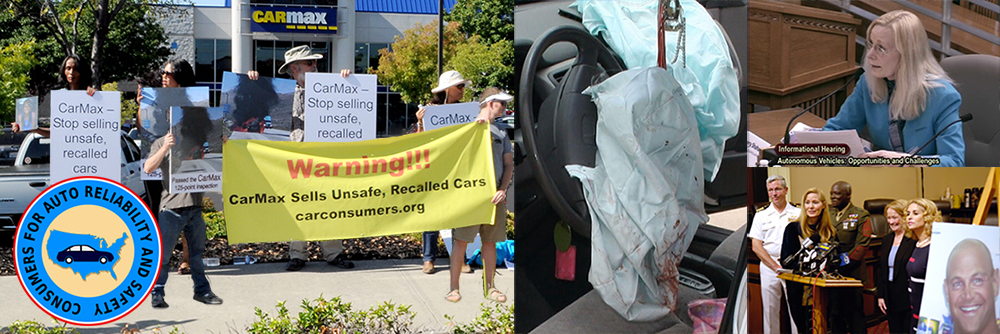
Car dealers are also price-gouging consumers over the price of used vehicles, and routinely selling them dangerous unrepaired recalled used vehicles without bothering to get the safety recall repairs done first — even though federal law requires auto manufacturers to provide safety recall repairs for free, for at least 15 years from when the recall is issued.

Car dealers often downplay the risks posed by safety recall defects. Don’t fall for it. Your life is precious, and if you’re paying top dollar to a professionally licensed car dealer, you deserve to get a car that is at least free from deadly defects, like brakes that fail, catching on fire, steering wheels that come off in the driver’s hands, sticking accelerator pedals, and faulty airbags that propel shrapnel into the passenger cabin, causing severe or fatal injuries such as blindness, or bleeding to death.

Car dealers are bragging in the automotive press about how their profits are also going through the roof. Billionaire investors like Bill Gates and Melinda French Gates — who are heavily invested in the AutoNation dealership chain, and Warren Buffett, whose Berkshire Hathaway conglomerate owns multiple car dealerships outright — are making vast profits by ripping off new and used car buyers, selling unsafe vehicles, and exploiting the computer chip shortage.

Some states have laws against price-gouging, but don’t hold your breath waiting for your state’s attorney general to protect you. Car dealers are so politically active and well-connected, they hardly ever get sued by public law enforcement agencies, no matter how blatantly they violate the law.

So what can you do to avoid falling prey to greedy car dealers?  Many car buyers are purchasing vehicles from other consumers, who don’t have to pay for advertising, overhead, and glittering, impressive structures. or attract investment capital.  Other consumers also don’t impose forced arbitration clauses on car buyers — unlike car dealers, who typically refuse to sell you a car unless you first surrender your Constitutional right to fight back in court, if they violate the law by committing fraud, rolling back odometers, falsifying loan applications, selling unsafe junkers or flood cars, selling cars that they don’t even own, or engaging in other crooked practices.

You can save a LOT of money by buying a car from another consumer, instead of being ripped off by a greedy car dealer. But you still have to be careful. Some con artists pose as private sellers, when in fact they are unlicensed dealers. They may tell you that they’re selling their own car, or their cousin’s car, when in reality that got that potential deathtrap on wheels from an auto auction, after it was rejected by another consumer and other dealers decided they didn’t want it on their car lot.

Here are tips from experts about how to get a good deal on a safe, reliable used vehicle, by taking control of the transaction yourself and buying from another car owner. This step-by-step process takes some time, but it can save you tons of $$  — and potentially save your life, and the lives of those you love.

Wishing you and your family safe, happy motoring, and freedom from price-gouging, inflation-fueling greedy car dealers!